Showing posts with label Mesothelioma. Show all posts

Mesothelioma Latency Period

Mesothelioma Latency Period

Malignant mesothelioma often has a long period of latency, in fact the longest of the asbestos-related diseases, before a mesothelioma diagnosis occurs in people. Diagnosis happens by mesothelioma doctors when the disease becomes apparent, but latency refers to the length of time it takes from being exposed to asbestos until the time when the disease becomes apparent in a clinical examination. Latency can be as short as 10 years or as long as 50, but the average length of latency for malignant mesothelioma is 35 to 40 years between exposure and diagnosis.

Because the latency period for mesothelioma can vary from patient to patient, so too does the age of onset of the disease vary. However, most adult mesothelioma cases are diagnosed in patients between the ages of 40 and into their 60s. Child mesothelioma, while rare, does occur in 2 to 5 percent of malignant mesothelioma diagnoses.

A shorter latency period may occur if a patient has had a higher exposure to asbestos. Many of the people who have a short latency period were exposed to asbestos on the job; this is especially true of people with occupations in shipyards as well as the asbestos and insulation industries.

The typical long latency period of this disease is a contributing factor to a poor mesothelioma prognosis. Most cancers respond much better if they are caught early in their development. Because mesothelioma remains under the surface for typically many years, it is often quite advanced once a diagnosis is made.
Forms of Mesothelioma

The different types of mesothelioma cancer are named based on the parts of the body in which the disease occurs. The three primary mesotheliomas are:
Peritoneal mesothelioma
Pleural mesothelioma
Pericardial mesothelioma

Peritoneal mesothelioma is found in the abdomen, while Pleural mesothelioma occurs in the lungs. Pericardial mesothelioma happens in the area of the heart. Where the cancer occurs may also play a part in the latency period; a study showed that 28 years was the average latency period for peritoneal mesothelioma with an average asbestos exposure duration of 5 years, and 35 years latency period with 11 years exposure duration for pleural mesothelioma, but exposure duration could vary widely.
Asbestos Exposure

Exposure to asbestos while on the job appears to be the major cause of mesothelioma. Asbestos was widely used in the United States in the 1960s, and thus the disease tends to become most apparent 30 to 40 years after this, so perhaps the peak of diagnoses in the U.S. will have been between 2000 and 2004. Because laws on exposure to harmful elements while on the job were put into place, it is expected that these statistics will not be on the rise. Australia and Europe may see a peak in 2010 to 2019, and it remains to be seen what will occur in third world countries without the benefit of strong occupational hazard laws in place.
The Future

These statistics may be in flux, however, for several reasons. They include:
better health care and better food, people are living longer after retirement
better occupational exposure regulations, workers are no longer exposed to high levels of asbestos
Fewer cases of bronchogenic cancer, which may be fatal in workers exposed to asbestos, before the mesothelioma has made a physical impact

Due to these factors, we may see more cases of new-onset mesothelioma.

Secondary or limited exposure to asbestos is a contributing factor to the difficulty encountered when trying to figure out exactly when asbestos exposure occurred. However, one of the consequences of the World Trade Center disaster may help researchers to better understand this disease. Because rescue, cleanup, recovery and volunteer personnel were exposed to asbestos along with other airborne contaminants, long-term studies of these people are under way, which may assist researchers in gaining more knowledge about this serious disease.

Sources

Mesothelioma Information

Mesothelioma Information


As with any disease or health condition, mesothelioma researchers have, over time, collected statistical information about mesothelioma. These statistics can help us learn about the proclivities of the disease and its incidence and potentially help future patients as we learn more about mesothelioma.
Incidence of Diagnosis

New cases of mesothelioma are diagnosed in between 2,500 and 3,000 Americans each year. These numbers, while significant, would indicate that mesothelioma is still a relatively rare disease, though incidence is expected to rise in the next decade according to projections.
Age at Diagnosis

The first diagnosis of mesothelioma typically occurs in men and women between the ages of 50 and 70 years. Mesothelioma patients, certainly, have been diagnosed at ages younger than 50 and older than 70, but diagnoses for those age groups are considered statistical anomalies.
Does Mesothelioma Occur in a Particular Sex or Racial Demographic More than Another?

Mesothelioma is much more common in men than women, due mostly to occupational asbestos exposure being more common among men of industrial labor sites. That is not to say, however, that women cannot be diagnosed with mesothelioma. In fact, recent evidence suggests that mesothelioma incidence in women may rise in the coming years as secondary exposures to asbestos can manifest in the form of a positive mesothelioma diagnosis. Also of note is that mesothelioma is much less common among African Americans than in Caucasians, the reasons for which researchers are still investigating.
What are Typical Patient Survival Rates Following a Mesothelioma Diagnosis?

As mesothelioma is often diagnosed in its advanced stages, the mesothelioma prognosis is sometimes poor with life expectancy being little more than a year following diagnosis. If diagnosed early enough however, patient prognoses increase dramatically. Patient survival rates are often contingent on the treatments available to the particular patient. In early mesothelioma stages, tumors eligible for mesothelioma surgery and will result in improved prognoses over those who are diagnosed with stage 3 mesothelioma or stage 4 mesothelioma. As new and alternative mesothelioma treatments are researched and employed in the future, it is realistic to anticipate an improvement in patient survival rates.
Other Mesothelioma Information
Mesothelioma Latency Period

Typically, there is a great deal of time between an individual's exposure to asbestos and the development of asbestos-related health complications. Mesothelioma is associated with a long-latency period (often 20-50 years) after exposure. Over a long period of time, lodged asbestos fibers slowly inflame the lung's external tissue, often serving as a pre-cursor to the development of malignant mesothelioma.
Adult Mesothelioma

Mesothelioma is most common in adults. Adults who have asbestos exposure history are typically those most at risk for the development of malignant mesothelioma. It can take many years for those exposed to asbestos exposure to exhibit the effects of exposure and, as such, mesothelioma is most often diagnosed in older individuals, often up to 40 years following exposure.
Child Mesothelioma

Childhood diagnosis of malignant mesothelioma is extremely rare, although it has been documented. Mesothelioma is known only to be caused by exposure to asbestos and takes many years following exposure to asbestos to manifest in adults. Generally speaking, childhood mesothelioma is considered to be unrelated to asbestos exposure.
Mesothelioma and Women

Many women that have been diagnosed with mesothelioma had no direct exposure to asbestos from working in industrial job settings. Instead they discover that they are victims of second-hand asbestos exposure that occurred while washing their husband's clothes that came home from work with asbestos fibers on them.
Mesothelioma Prevention

Mesothelioma is known only to be caused by exposure to asbestos, a naturally occurring fibrous mineral that was used for many years as an industrial insulation component. As such, the best mesothelioma prevention is the avoidance of exposure to asbestos. However, in recent years, physicians and cancer specialists have been developing a mesothelioma vaccine that will arm the body's immune system with cancer fighting anti-bodies and antigens in those who are at risk for the development of mesothelioma.
Mesothelioma Vaccine

Recent studies by researchers in the Netherlands have found promising results in preventative therapies for mesothelioma. Using cancer-fighting antigens within the body's immune system, mesothelioma patients have responded positively in most cases when treated with the mesothelioma vaccine. The hope is now that this therapy can be applied to those who may be at risk of developing mesothelioma in the future, particularly those who have been exposed to asbestos but have yet to develop asbestos disease.
Medical Timeline

Historical timeline containing important facts and developments related to the manufacture and use of asbestos and documented cases of mesothelioma cancer and other asbestos related diseases.
Mesothelioma Misspellings

The word “mesothelioma” is often misspelled by people searching on the internet for information about this asbestos cancer. In this section we list some of the most common misspellings that we have seen individuals use in their internet searches for mesothelioma.
Mesothelioma Misconceptions

There are several common myths and misconceptions about mesothelioma. Learn more about what the true facts are about this asbestos-related disease.
Mesothelioma Disease

Mesothelioma cancer is a rare disease that attacks the cells of the tissue that lines the body cavity called the mesothelium. It’s only known cause is exposure to asbestos fibers.

Source

Mesothelioma Prognosis

Mesothelioma Prognosisv


When an individual is diagnosed with mesothelioma or any other kind of cancer, one of the first questions they will have is “How long do I have to live?” This is a scary question - and a hard one to ask - but one for which most cancer patients will eventually seek an answer.

It is often very difficult for oncologists and members of a patient’s medical team to give a definitive answer to this query. Indeed, every case is different and cancer can be an unpredictable disease. Sometimes, cases that look hopeless turn out to be not so bleak. In other cases, cancers that don’t look so bad progress quickly and result in an untimely death.

Overall, the prognosis has been rather grim for mesothelioma patients during these past few decades. Malignant mesothelioma is extremely aggressive and has a long latency period. Hence, cases are usually not detected until the disease has reached the advanced stages of cancer. As a result the prognosis for such patients is often not favorable; the mesothelioma survival rate following diagnosis is usually just a year or two. That doesn’t mean, however, that there won’t be exceptions and that this dour outlook will not change in years to come, especially as more and better treatments are developed.
Determining Prognosis

Currently, a number of different issues determine the mesothelioma patient’s prognosis. These include:

Type - Mesothelioma is classified as one of three types, depending on the tissues involved. The epithelial type accounts for about 50 percent of all cases, sarcomatoid mesothelioma is seen in 15 percent of diagnosed patients, and 35% have the mixed type of the disease. Those with epithelial mesothelioma have a better survival rate than the other types.

Location - Mesothelioma is also classified on the basis of location. For example, pleural mesothelioma, which attacks the lining of the lung, is the most common, accounting for approximately 8o percent of all cases. Those with this type of cancer have the best rate of survival. Peritoneal mesothelioma, found in the lining of the abdomen, is the next most common and is diagnosed in about 10 -15 percent of mesothelioma victims. It is generally harder to treat. Less common types are very difficult to treat, including pericardial and testicular mesothelioma.

Stage of the disease - The prognosis for mesothelioma cancer depends on how early the disease is diagnosed and how soon treatment can begin. Because of the disease’s extended latency period, it is often not diagnosed until it has reached Stage 3 or 4, when mesothelioma symptoms finally appear. Sadly, many of these symptoms are common to a wide range of respiratory diseases including many that are less serious, like the flu or pneumonia. This often results in misdiagnosis.

Metastasis - When a mesothelioma diagnosis is finally made, oncologists will often find that the cancer has spread - or “metastasized” - from the location of the primary tumor - usually the pleura - to other parts of the body, often to the nearby organs as well as the lymph nodes. The extent of the metastases will determine what type of treatment is recommended as well as the prognosis.

General health of the patient - Simply put, younger and stronger patients with mesothelioma live longer than those of advanced age who have extant health problems. Seniors are often dealing with issues like heart disease, diabetes, and high blood pressure, making mesothelioma surgery as well as traditional cancer treatments much more risky and severely limiting treatment options.
Additional Mesothelioma Prognosis Factors
Mesothelioma Life Exptectancy

Life expectancy for those diagnosed with malignant mesothelioma depends on a number of factors including, general patient health, cancer stage at diagnosis, and the eligibility of the patient for certain treatment options. Those diagnosed with early stage cancer and in generally good health will have a more favorable prognosis than those diagnosed with later-stage disease.
Mesothelioma Survival Rate

Most survival rates for cancer are quoted in regards to what is commonly known as the relative five-year survival rate. This indicates the number of patients who are still alive five years after they are diagnosed with the disease. Currently, the five-year survival rate for mesothelioma victims is just 10 percent. Though this seems like a grim number, it is indeed higher than it was about 10 years ago and much higher than it was 20-30 years ago.

The current one-year survival rate for mesothelioma patients is about 40 percent. This has also increased significantly in the last 10 years. Unfortunately, however, the prognosis for most mesothelioma patients remains poor overall. Many still die less than a year after diagnosis, with the average survival rate being 10-11 months, according to the American Cancer Association.
Mesothelioma Remission

Mesothelioma is one of the most aggressive types of cancer and can quickly metastasize from its origin into the lungs, abdominal cavity, and lymph nodes. As a result, very few mesothelioma patients go into remission. However, if treated properly and early enough, many patients have been able to extend survival rates long beyond previous expectations. Treatment options include surgical resection, chemotherapy, and mesothelioma radiation.
Mesothelioma Cure

While there is still no cure for mesothelioma, significant strides have been made over the past ten years in the area of mesothelioma research. As a result there are new tests that have been developed to help medical professionals detect the cancer sooner and there is a wide range of new treatment options available that can lead to improved life expectancy for mesothelioma victims. Patients who are diagnosed with early-stage disease may survive many years if the cancer is treated early with surgery, chemotherapy, and managed radiation therapy. Many patients have also had success through the utilization of alternative therapies in conjunction with conventional cancer treatments.
Mesothelioma Survivors

While there is currently no cure for mesothelioma, many patients have had success in managing their cancer with not only traditional treatments like chemotherapy and surgical methods, but also through the use of nutritional supplements, palliative therapies, and body-stress reduction techniques. Some patients diagnosed with mesothelioma have survived many years after what was an initially unfavorable prognosis.
Improving the Mesothelioma Prognosis

During the last decade, the plight of mesothelioma sufferers has gained more attention and more research dollars have been funneled towards the study of this disease and the discovery of new and novel drugs and treatments to provide more hope of a better prognosis for the mesothelioma sufferer.

Scientists have been working on new tests that strive to diagnose the disease at an earlier stage. For example, the Mesomark® assay is a simple blood test that measures the rate of Soluble Mesothelin-Related Peptides (SMRP) in the blood. This biomarker is released by mesothelioma cells into the bloodstream and SMRP can be elevated for many years before symptoms appear and an actual diagnosis of the disease is made. This tool for early diagnosis could potentially save hundreds of lives.

Treatments with new chemotherapy drugs like Alimta® and procedures that deliver more targeted radiation to the tumor have also helped to add to a mesothelioma patient’s life expectancy. In addition, experimental treatments such as immunotherapy, gene therapy, and photodynamic therapy have shown some success in treating this difficult disease.

Each new step in the field of mesothelioma research improves the mesothelioma prognosis little by little and provides additional hope for mesothelioma-affected individuals and their loved ones.
source

Mesothelioma Stages

Mesothelioma Stages


How is mesothelioma staged?

Staging is the process of finding out how far the cancer has spread. Staging of mesothelioma is based on imaging studies such as x-rays, CT scans, and MRI scans. The mesothelioma treatment and life expectancy for patients with the disease largely depends on the stage (extent of spread) of their cancer. Since pleural mesothelioma occurs most frequently and has been studied the most, it is the only mesothelioma for which a staging classification exists.
Mesothelioma Staging Systems

Today, there are three primary staging systems used to assess how far mesothelioma cancer has spread and each system uses four stages to describe the progression of the disease. It is the definition of each stage within the various systems that can vary slightly.
Butchart Staging System

The staging system most often used for mesothelioma cancer is the Butchart system and is focused on defining the location of the primary tumor mass in body for each stage. The system doesn’t address how many cancer cells are present, how big the tumor is or the level of cancer present in the body overall.
TNM Staging System

The TNM Staging System, developed by the American Joint Committee on Cancer (AJCC), is similar to staging systems used for other types of cancer. It considers the characteristics of the tumor (T), whether or not lymph nodes are involved (N) and if the cancer has metastasized to other locations in the body (M).
Brigham Staging System

The Brigham Staging System also has four stages of progression and is very similar to the TNM Staging System. The primary difference between the two is that in addition to defining the location of the tumor, and assessing lymph node involvement and the presence of metastatic disease, the Brigham System also helps assess the possibility for and effectiveness of surgical intervention at each stage.
The Stages of Mesothelioma

The four stages of mesothelioma, as noted above, vary slightly within each system but can be generally characterized as indicated below. Please click into the individual pages to get more information about each stage in general and as is it defined within each staging system:
Stage 1 Mesothelioma

In Stage 1 the tumor is localized, there is no lymph node involvement and the cancer has not spread to other organs or tissues.
Stage 2 Mesothelioma

In Stage 2, the tumor is larger and has invaded the lung or diaphragm. Lymph nodes may also be involved.
Stage 3 Mesothelioma

In Stage 3, mesothelioma has invaded a single region or area such as the chest wall.
Stage 4 Mesothelioma

In Stage 4, mesothelioma has invaded multiple regions such as different areas of the chest wall, the diaphragm and/or the pericaridium. Lymph glands are also involved and the cancer has spread to other organs.
source

Mesothelioma Types

Mesothelioma Types


Types of Mesothelioma by Site
Pleural Mesothelioma

Malignant pleural mesothelioma often originates within the chest cavity and can, at times, involve the lung. This particular form of mesothelioma can metastasize to numerous organs in the body - even the brain - and tends to do so more frequently than not.

Pleural mesothelioma is not always easily detectable. Frequently, in the early stages of the disease, such as stage 1 mesothelioma, symptoms may be mild. Patients usually report pain in one area of the chest that never seems to go away, weight loss and fever. Occasionally, other symptoms are more severe and include problems with breathing due to fluid build up in the chest. A CT Scan of the chest area has proven to be the best test for identifying how far along the disease has progressed.

Frequently serum markers are used to diagnose of various forms of cancer. Mesothelioma cannot be diagnosed using this method as no serum markers currently exist. If high levels of hyaluronic acid are present it may be possible to distinguish mesothelioma types from other types of cancer or to determine the effectiveness of a treatment protocol.

The mesothelioma survival rate for patients diagnosed with pleural mesothelioma typically is not high as patients often do not live beyond seventeen months from the onset of symptoms. Only 8% of those with a mesothelioma diagnosis will live three to five years from the onset of mesothelioma symptoms.
Pericardial Mesothelioma

Pericardial mesothelioma is the least common form of mesothelioma. Pericardial mesothelioma, as the name suggests, involves the heart. This rare type of mesothelioma cancer invades the pericardium, the sac that surrounds the heart. As the cancer progresses, the heart is not able to deliver oxygen as efficiently to the body causing further decline in health at an increasingly rapid rate. The symptoms most commonly associated with pericardial mesothelioma mimic those of a heart attack: nausea, pain in the chest and shortness of breath.
Peritoneal Mesothelioma

Peritoneal mesothelioma originates in the abdomen and will frequently spread to other organs in area including the liver, spleen or bowel. Severe abdominal pain is the most common complaint that patients present to mesothelioma doctors. There may also be a discomfort level with fluid buildup in the abdomen as well. Other symptoms of peritoneal mesothelioma may include difficult bowel movements, nausea and vomiting, fever and swollen feet.

The survival rate is even worse for those diagnosed with peritoneal mesothelioma with patients typically surviving only ten months from the time that they first started experiencing the symptoms noted above.
Types of Mesothelioma Tumors
Malignant Mesothelioma

Malignant mesothelioma is an uncommon form of cancer and of all asbestos related diseases, the most serious. The symptoms associated with the disease make it difficult for doctors to diagnose. Often, by the time that a proper diagnosis is made, the disease has progressed to a point where patients do not respond well to treatment therapy. Malignant mesothelioma is caused almost exclusively by the inhalation of airborne asbestos particles. Another unique factor associated with the disease is that there can be a long latency period between the time of asbestos exposure and the actual manifestation of the disease in the form of malignant mesothelioma.
Benign Mesothelioma

Benign mesothelioma, or non-malignant mesothelioma, is much easier to treat than the malignant form of the cancer and can be treated successfully in many cases.
Mesothelioma Cell Types
Epithelial Mesothelioma

Epithelial Mesothelioma is the most common cell type and accounts for approximately 50-75% percent of all diagnosed cases each year. These cells are uniform in shape, with an elongated pattern that makes them easily distinguishable when viewed under high magnification. These types ofcancercells are adenocarcinomas, malignancies which are more commonly associated with pure lung cancers as opposed to cancers of the mesothelium.
Sarcomatoid Mesothelioma

Sarcomatoid mesothelioma is a less common cell type, accounting for between 7 and 20% of mesothelioma cases each year. These cells grow forth out of supportive structures, such as muscles and bones.
Biphasic Mesothelioma

Biphasic mesotheliomas are those with a mix of epithelial and sarcomatoid cell types. Mesothelioma treatment options do not vary greatly for different cell types, but often sarcomatoid mesotheliomas are more difficult to treat as a result of the surrounding affected tissues that they spread from.
Papillary Mesothelioma

Papillary mesothelioma, also known as well-differentiated mesothelioma, is a form of the asbestos cancer that typically affects women. In many cases this cell type is benign and not likely to spread to other organs in the body.
source

Mesothelioma Diagnosis

Mesothelioma Diagnosis


How do medical professionals diagnose mesothelioma?

If you believe that you may have mesothelioma, a qualified medical professional will use a variety of diagnostic tests and methods to confirm the presence of the disease.

The first step that mesothelioma doctors will take in evaluating an asbestos related disease is to obtain a full medical history to determine the level and severity of mesothelioma risk factors and presenting mesothelioma symptoms. This interview will consider among other things, where asbestos exposure occurred, the length of exposure and the amount of asbestos that you were exposed to.

In addition, he/she will perform a medical exam to look for signs and symptoms of various types of mesothelioma. For example, if pleural mesothelioma is suspected the doctor will look for fluid in the chest, peritoneal mesothelioma often shows fluid in the abdomen and pericardial mesothelioma presents with fluid in the area of the heart.
Diagnostic Tests
Imaging Scans

Diagnostic image tests like x-rays, CT scans and MRI's are useful in obtaining more information about the cancer including how far it is progressed. Each method provides another piece of information for your doctor to assist him/her in making an accurate diagnosis. Chest x-rays are used to identify abnormalities in the lungs including unusual thickening, mineral deposits and fluid in the chest area. CT scans are capable of providing images of the same location from many different angles. MRI technology uses magnetic fields rather than x-ray to provide additional views.
Biopsies

A biopsy is an important diagnostic procedure recommended by doctors for patients presenting with signs and symptoms of mesothelioma that have a history of asbestos exposure. Fine needle aspiration is the less invasive type of biopsy that can be performed. More invasive surgical biopsies are recommended if results from a needle biopsy are inconclusive or if a needle biopsy is not recommended for medical reasons.
source

Mesothelioma Symptoms

Mesothelioma Symptoms


What are the warning signs of mesothelioma?

Mesothelioma is difficult to diagnose because the early signs and symptoms of the disease can be subtle at best. Symptoms are all too frequently ignored or dismissed by people who are inclined to attribute them to common every day ailments. Sometimes patients live with symptoms for up to 6 months before being diagnosed but usually the symptoms are present for two to three months prior to a mesothelioma diagnosis.

About 60% of patients diagnosed with pleural mesothelioma experience lower back pain or side chest pain and there are frequent reports of shortness of breath. Lower numbers of people may experience difficulty swallowing, or have a persistent cough, fever, weight loss or fatigue. Additional symptoms that some patients experience are muscle weakness, loss of sensory capability, coughing up blood, facial and arm swelling and hoarseness.

Peritoneal mesothelioma originates in the abdomen and as a result, symptoms often include abdominal pain, weight loss, nausea, and vomiting. In the event that there is a hernia present, fluid buildup may occur in the abdomen as well.

Anyone previously exposed to asbestos displaying any of these symptoms should seek medical attention from mesothelioma doctors who specialize in treating mesothelioma like Dr. David Sugarbaker.
How long does it take for mesothelioma symptoms to appear?

One of the most unique facts about mesothelioma is that the disease is characterized by a long latency period that is very often associated with the disease. The latency period is the amount of time that elapses from the first point of asbestos exposure to the point where symptoms begin to appear so that a diagnosis can be made. In some mesothelioma cases the latency period is reported to be 10 years but the average latency for the majority of cases is between 35 and 40 years. As a result, the cancer often progresses to later stages before a diagnosis is made. When diagnosed in the later stages, mesothelioma treatment options become more limited and are less effective.
Symptoms of Mesothelioma

Provided below is a list of symptoms that mesothelioma patients may experience. Please click on a symptom to learn more about it.
Anemia

Mesothelioma patients diagnosed with anemia have a lower than normal red blood cell count or hemoglobin in the blood which can cause fatigue and if left untreated, result in a loss of bone marrow.
Blood Clotting Disorder

A symptom experienced by many mesothelioma patients that can lead to anemia and other serious complications if not given appropriate medical attention.
Bowel Obstruction

A very painful symptom that can sometimes develop in peritoneal mesothelioma patients due to fluid buildup in the abdomen.
Chest Pain

Often experienced in pleural mesothelioma and pericardial mesothelioma patients, chest pain can develop as the tumor grows and places strain on the lungs and heart.
Dysphagia

Pleural mesothelioma patients often develop difficulty swallowing (esophageal dyphagia) as the mesothelium continues to grow on the lungs.
Fluid Effusion

An effusion can occur in mesothelioma patients when there is fluid buildup affecting either the pleura or pericardium.
Hemoptysis

Hemoptysis, or the symptom of coughing up blood, can have its origins in the lungs, bronchi or trachea of mesothelioma patients.
Nausea

Nausea is experienced in a number of cancer patients as it is often a side effect of chemotherapy treatment. Those diagnosed with peritoneal mesothelioma may also experience nausea as a result of increasing abdominal pressure.
Peritoneal Effusion

Peritoneal mesothelioma patients may experience a buildup of fluid in the peritoneum as the tumor continues to grow. This can result in an effusion which can inhibit the function of abdominal organs.
Pleural Effusion

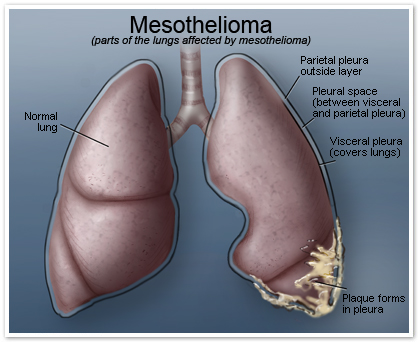
In pleural mesothelioma patients, pleural effusion may develop when there is a large amount of fluid present in the pleura, the lining between the lungs and chest cavity.
Weight Loss

Weight loss can occur in mesothelioma patient as a side effect from cancer treatment or as the result of other symptoms that may also be present such as difficulty swallowing or nausea.
source

Mesothelioma Causes

Mesothelioma Causes
What are the main causes of mesothelioma?


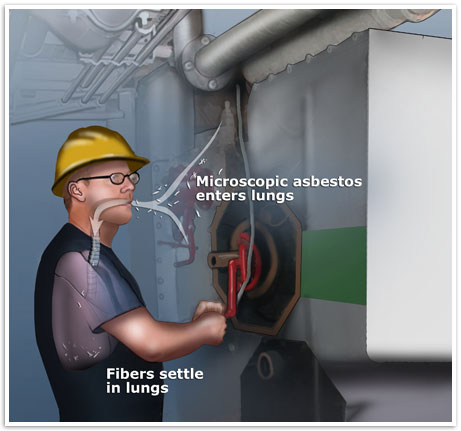
Mesothelioma is most predominantly caused by asbestos exposure. Asbestos fibers that are inhaled through the mouth and nose may eventually become embedded in the lining of the lungs, causing damage and resulting in mesothelioma lung cancer or asbestosis (scar tissue formation in the lungs). It has also been found that swallowing asbestos fibers could contribute to a form of mesothelioma originating in the abdomen called peritoneal mesothelioma.

Mesothelioma cancer generally results from occupational exposure but there are instances of environmental exposure to asbestos that can cause mesothelioma disease. Oftentimes second hand exposure of a family member to an asbestos workers dirty work clothes can result in that family member having a mesothelioma diagnosis.

Asbestos insulation workers appear to have the highest death rate. One study reports that almost six percent of asbestos workers fall victim to mesothelioma or experience mesothelioma symptoms and asbestos insulation workers are over 300 times more likely to die from mesothelioma than the general public.

source

Mesothelioma Cancer

Mesothelioma Cancer

Malignant mesothelioma is the most serious of all asbestos-related diseases. Although uncommon, mesothelioma cancer is no longer considered rare. Making a correct mesothelioma diagnosis is particularly difficult for doctors because the disease often presents with symptoms that mimic other common ailments. There is no known cure for mesothelioma, but treatments such as mesothelioma radiation and chemotherapy have helped to improve the typical mesothelioma prognosis.
The cavities within the body encompassing the chest, abdomen, and heart are surround by a membrane of cells known as the mesothelium. Mesothelial cells assist in general organ functions.

The mesothelium is particularly important to organs which are commonly in motion, such as expansion or contraction of the lungs, stomach, or heart. Lubrication from the mesothelial cells allows free range of motion within the body. The mesothelium of the chest, abdomen, and cardiac cavity are called the pleura, the peritoneum, and the pericardium, respectively. Each of these groupings of mesothelial cells are extremely critical to the functions of the body structures which they encompass.

Malignancies (cancerous tumors) occurring within the mesothelial membranes are known as malignant mesothelioma, or simply mesothelioma. Benign tumors of the mesothelium are known to occur, but are much rarer than the more common mesothelioma cancer.

While tumors of the mesothelium were first recognized in the late 18th century, it was not until the middle of the 20th century that this particular cancer was studied and examined with more detail. It was at this time where suspicions of the cancer’s causal relationship with asbestos exposure became more substantiated. A joint study through the Department of Thoracic Surgery at the University of the Witswaterand/Johannesburg General Hospital in South Africa provided the most compelling evidence of the nexus between asbestos exposure and the development of pleural mesothelioma.

Incidence of mesothelioma is still quite rare, with only 2,500-3000 diagnoses in the United States each year. There was a spike in reported diagnoses between 1970 and 1984, which has been attributed to the latency period between diagnosis and the height of industrial exposures- which occurred roughly 40-60 years prior to this time. Exposure was common in nearly all industries but was particularly common in the WWII-era military industrial cycle, including Navy Shipyards.

Although this cancer is much more common in men over the age of 60 (largely attributed to the industrial exposures within male-dominated industries), mesothelioma in women and children has been described as well. Mesothelioma causes for diagnosis in women and children are mainly attributed to secondary exposure to asbestos, as it was not uncommon for men to bring asbestos back into the home on their body or clothing if proper cleaning facilities were not available on site.

There are three recognized mesothelioma cell-types. Between 50 and 70% of all mesotheliomas are of the epithelial variety. While prognosis is generally poor, these are considered less aggressive than mesotheliomas of the sarcomatoid and biphasic variety, which comprise the remainder of diagnoses. Mesothelioma treatment options for each type of diagnosis are essentially the same, depending on stage at diagnosis and overall patient health.

Pleural mesothelioma (affecting the lung’s protective lining in the chest cavity) represents about three quarters of all mesothelioma incidence. Peritoneal and pericardial mesotheliomas, affecting the abdominal and cardiac cavities comprise the remainder. Testicular mesothelioma is extremely rare and is typically presents with metastases of the peritoneal variety.
How is Mesothelioma Cancer Treated?

Mesothelioma, while certainly an aggressive disease, is a treatable malignancy. While there is no cure for mesothelioma, treatment options including surgery, chemotherapy, and radiation therapy are available for many patients. While a combination of Alimta® and Cisplatin is currently the only FDA approved chemotherapy regimen, several clinical trials are currently in progress utilizing other drugs including Gemcitabine and Onconase, with many showing dramatically improved results in certain cancer patients.

Radiation therapy is also utilized, but typically in conjunction with other treatment methods like surgery and chemotherapy. Surgical resection of mesothelioma is possible in early-stage-diagnosed patients. Aggressive surgeries such as extrapleural pneumonectomy can extend survival rates far beyond previously-thought timeframes. Diagnostic and palliative surgeries such as pleurocentesis and pleurodesis are also common in patients of malignant mesothelioma cancer.

Alternative therapies have also been used effectively by many mesothelioma patients to assist in managing symptoms of the disease and conventional treatments. These treatments are mainly preferential but can be extremely valuable to many patients.
How is Mesothelioma Cancer Diagnosed?

Mesothelioma can be a difficult malignancy to diagnose because the symptoms and pathology of the disease closely resemble other respiratory conditions. For this reason, misdiagnosis is not uncommon in mesothelioma patients. Symptoms of mesothelioma include chest pain, chronic cough, effusions of the chest and abdomen, and the presence of blood in lung fluid.

Diagnostic surgeries, including a biopsy, will typically be required to determine the type of malignant cells that are present in the body. Typically a body imaging scan, including a magnetic resonance image (MRI) or computer topography (CT scan) will be required to determine the extent and location of the disease.

Mesothelioma patients are generally referred by their personal physicians to one of the many renowned mesothelioma doctors in the United States. These oncologists are well versed in the disease behavior and pathology and are the most familiar with cutting-edge mesothelioma treatment options. Dr. David Sugarbaker of the Brigham and Women's Hospital, an extension of Harvard University and the Dana Farber Cancer Institute in Boston, MA, is at the forefront of mesothelioma treatment through the International Mesothelioma Program.
What Causes Mesothelioma Cancer

Mesothelioma is known only to be caused by exposure to asbestos, though cases have been documented in children or other individuals with no asbestos history. Asbestos is a microscopic and naturally-occuring mineral that lodges in the pleural lining of the lungs and the peritoneal lining of the abdominal cavity. In most cases, several years will pass (up to 60) before mesothelioma develops in those who had been exposed to asbestos.

In many cases, those diagnosed with mesothelioma who are known to have been exposed to asbestos may be eligible for financial compensation from asbestos manufacturers for their illness. Those who have been diagnosed with mesothelioma and were exposed to asbestos should fill out the brief form on this page. We'll rush you a complimentary mesothelioma and asbestos exposure information kit detailing new mesothelioma treatments, active clinical trials, top doctors, as well as how to obtain compensation for asbestos-related health conditions like mesothelioma.
source